Updated on April 27, 2026
In short: a project scoping note is a formal document that defines the scope, objectives, actors and macro schedule of a project before it is launched, and serves as a reference to align the client, the team and the management.
Often misunderstood or even underestimated, the project framework note is nevertheless one of the most decisive documents at the launch of a project. In just a few pages, it lays the foundations: objectives, scope, deliverables, actors.
But it is still necessary to know how to build it effectively. Indeed, a poorly written scoping note can generate misunderstandings and jeopardize the progress of the project.
In this article, we'll show you how to write a clear and relevant framework note, and we'll provide you with a ready-to-use framework note template.
🔎 What to remember about the project scoping note
- The framework note covers 10 key sections : context, SMART objectives, IN/OUT scope, actors, macro planning, resources, risks, communication, deliverables and budget, covered in 5 to 15 pages depending on the complexity of the project.
- It is written before the operational launch by the project manager (sometimes in tandem with a PMO or a senior consultant) and is validated collectively in COPIL with the sponsor and the client.
- Its legal value remains limited unless it is annexed to a contract or an engagement letter. To secure a project, provide a specification, a purchase order or a separate engagement letter.
- A framework note is a living document : it is revised as soon as a change in scope, schedule, budget or key players changes the foundations of the project, with each update going through a formal COPIL review.
What is a project scoping note?
🔎 Synonyms: summary note, release note, scoping letter, project scoping note, scoping document.
A project scoping note is a scoping document that outlines the essential elements of a project. Thus, it serves as a reference for project planning and monitoring as it provides an overview of the project's actions and objectives.
The framework note ensures that everyone has the necessary information. It validates:
- objectives,
- the issues,
- the scope of the project,
- the content,
- chronology,
- deliverables,
- the target audience.
Thus, the project framework note must make it possible to answer the QQOQCP questions.
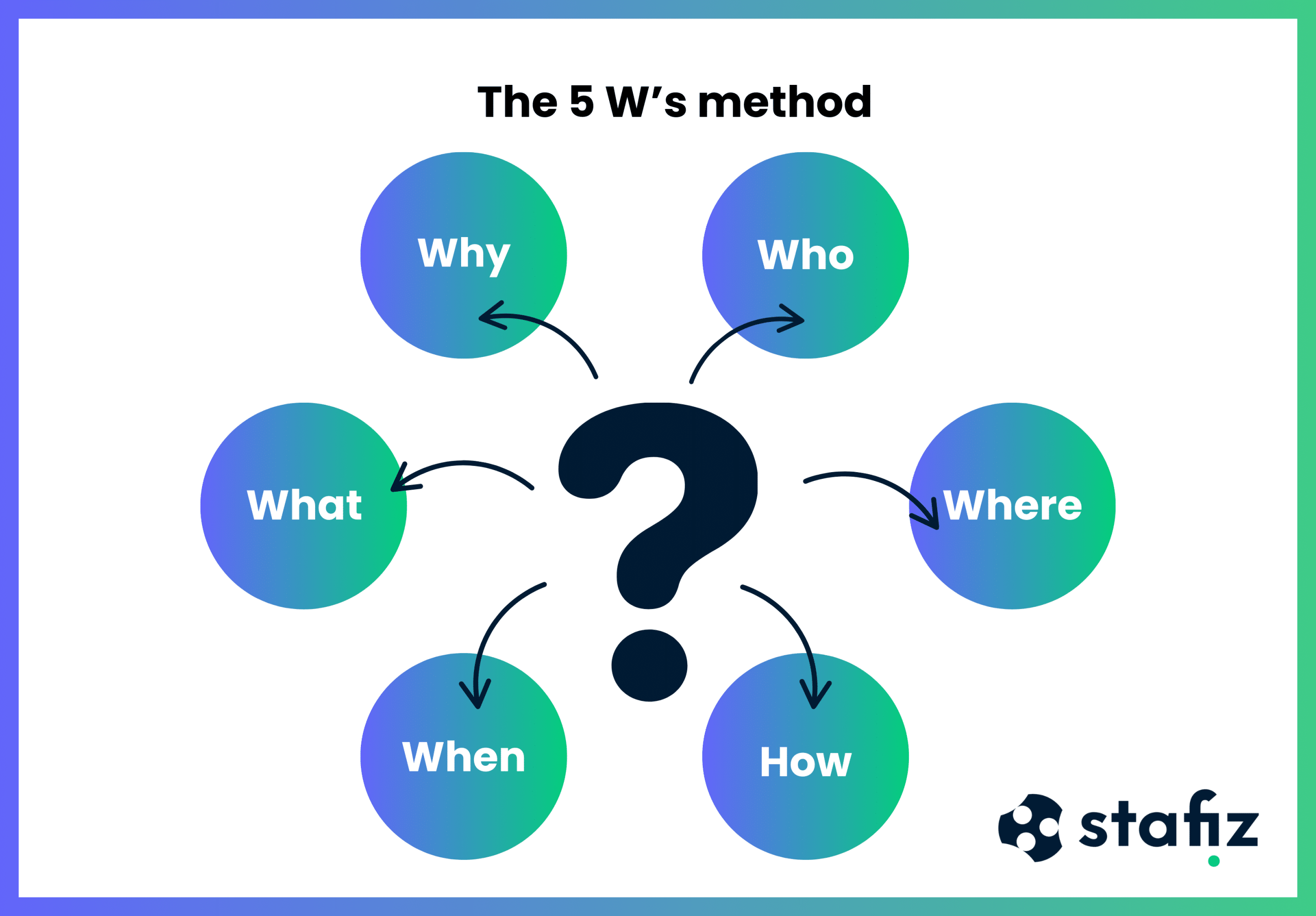
Written by the project manager, it is relatively concise and offers a macro vision of the project.
When to write the project scoping note?
The project scoping note is used in the design phase of the project.
However, the timing depends on the context and in any case, it is written at the beginning of the project.
- In the pre-sales phase
In the IT Services and consulting firms, the project framework note is useful from the pre-sales stage.
Written with the sales team, it clarifies the value proposition to the customer and serves as a transition between pre-sales and operational launch.
- In the launch phase
In other contexts, the project framework note is written between the validation phase of the need and the operational start of the project.
More complete than in pre-sales, it becomes a reference for writing specifications.
Who is the project framework note for?
The project scoping sheet has two main targets.
- The stakeholders involved in the implementation of the project : i.e., the project team, the copil who acts on important decisions, the person responsible for allocating resources.
- Contacts with a need for information: such as the customer and the management committee in particular.
What are the challenges of a project scoping note?
Challenges Faced By the Project Manager
The project scoping note is strategic because it allows stakeholders to be aligned :
- the customer,
- the team,
- management.
The project manager must then ensure that the information is realistic, reliable, and understandable by all.
The scoping note clarifies strategic points of the project such as objectives, scope, budget and risks. However, interests sometimes diverge between the client's expectations and internal feasibility.
The challenge then becomes to put everything on the table in order to avoid any tension that could complicate the development of the project.
Finally, this strategic document clarifies the scope of the project in order to limit abuses.
The framework note, which is clear, concise and factual, clearly indicates what will be done and what will not be done.
Management's expectations
- For the CEO
The project framework note has a strategic scope which, therefore, involves the CEO. Indeed, it can impact the sustainability of the customer relationship if expectations diverge, which can also have repercussions on the company's reputation.
In addition, it must ensure that the project remains aligned with the company's overall strategy.
Through the project scoping note, the CEO must then be able to clearly visualize the benefits for the customer, identify the measures taken to control risks and deadlines in order to avoid project deviations.
- For the CFO / CFO
For the CFO, the framework note represents a financial commitment and allows them to take stock of the costs of the project : what it will bring in but also the financial risks taken if it is implemented. Controlling project costs is one of the priorities and the project framework note must give a realistic vision in order to anticipate as well as possible.
The project framework note then allows you to define a provisional budget and invoicing terms. This ensures maximum transparency on the organisation of budget planning.
The challenges of project framing on production
The project scoping note allows operational teams to clearly understand what is expected, in terms of objectives and deliverables. In addition, it helps to identify the different interlocutors and the roles of each.
As a result, the scoping note highlights clear objectives, structured in a realistic schedule by including specific deliverables. This approach greatly facilitates project planning.
Operational challenges
- Better capacity management
The project scoping note has a key role in the operational organization of the project because it organizes the management of the capacity planning so that the right skills are available at the right time.
Thus, the project scoping note makes it possible to optimize capacity and workload in order to ensure the fluidity of projects and the respect of priorities. It facilitates the anticipation of needs and the sourcing of talent.
The project scoping note provides clarity on:
- outbuildings,
- project milestones,
- the expected deliverables,
- resource requirements.
In the event of a change in scope, this note can be modified and updated during a scoping meeting.
- A more balanced workload
The project framework note gives an idea of occupancy needs. It establishes the resources needed to:
- optimize the occupation rate,
- ensure that the utilization rate is optimal,
- avoid inter-contract periods,
- identify and limit underload and overload,
- anticipate skills needs.
The summary note thus helps to obtain visibility on the resource planning, both long-term and short-term.
What is the purpose of a framing note?
The project scoping note serves several purposes.
Organize the macro schedule
This project sheet defines the main lines of the mission:
- the estimation of the resources required,
- Identification of stakeholders,
- roles and responsibilities
- priorities,
- the budget allocated,
- the risks to watch out for.
Constitute a contractual support
In addition, it becomes a single point of reference for project monitoring and ensures that stakeholders remain aligned with the initial objectives.
It puts in black and white the orientations taken to minimize misunderstandings.
Determine the scope of the project
The note allows you to frame the project by dealing with each aspect of the project. It gives a global vision to launch and monitor the project.
Clarifying the expected benefits
The framework note establishes the objectives to be achieved, what will be delivered and what will not.
It provides maximum transparency, right from the start, to avoid any misunderstandings.
Validate alignment with the customer
Alignment with the client is facilitated by the clarity of the key points of the project mentioned in the scoping note.
This helps to set expectations.
How to differentiate the project scoping note from other project monitoring methods?
The project scoping note has a very specific role and is different from other tools, such as:
- the COPIL, which takes decisions during the project,
- the project review, which monitors the progress of the project on a regular basis,
- the specifications, a document that also includes a framework document that organizes the micro planning of the project and details each task in a specific way,
- The project plan, a more detailed and complete version of the scoping note.
What does a project scoping note contain?
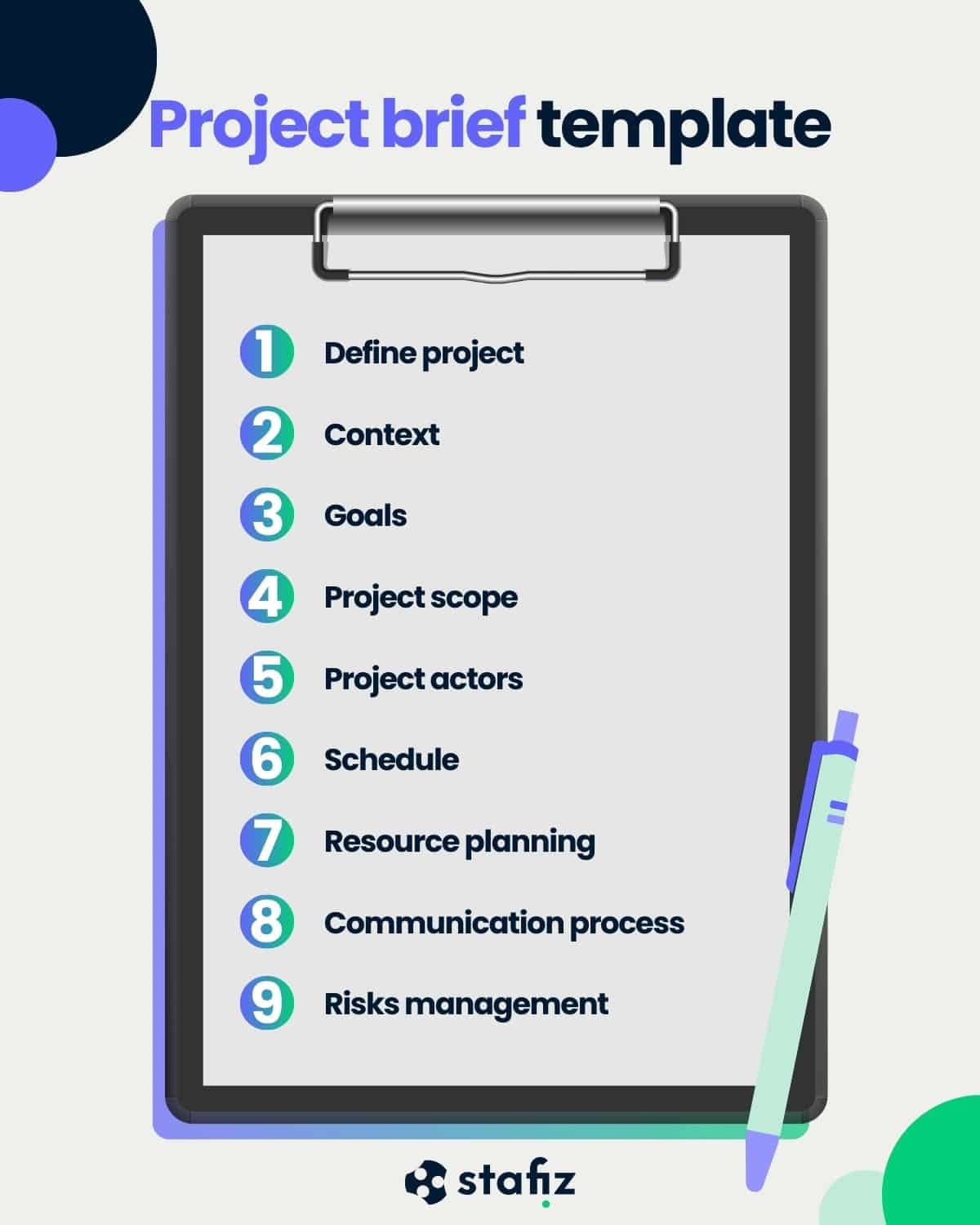
Here is a project scoping note template that adapts to a digital and IT project , but can be adapted to meet specific needs.
1. Project definition
In a few words, describe what the project is about. This is the "what" of the QQOQCP matrix.
2. Background and origin of the project
Specify the origin of the project, where did it come from and why is it taking place now?
Quickly introduce the context in which the project takes place, both internal and external (economic, political, environmental situation).
3. Project objectives
This is one of the most important parts of the project scoping note.
Explain what the project will bring once it is completed and what it seeks to accomplish, identify success criteria that will allow you to evaluate the success of the project.
Use the SMART method : Specific, Measurable, Achievable, Realistic, Time-bound, and introduce quantitative (e.g., additional revenue achieved) and qualitative (customer satisfaction) data.
4. Scope
This part describes what the project encompasses, and especially what it does not, to ensure that all stakeholders are aligned.
5. Actors
The executive summary notes list all stakeholders.
- The management, in charge of project governance, ensures that the project is integrated into the company's strategic vision.
- The client or their representative validates the decisions and keeps an eye on the direction the project is taking.
- The operational teams, who put in place the necessary actions to ensure that the project takes shape in a concrete way.
- Experts, when the project involves advanced technical issues.
Thus, the project framework note clarifies who does what, who is responsible for what so that everyone knows their role and responsibilities.
6. Planning
This part details the key milestones of the project and sets up the timeline of the project.
It is thus a question of clarifying the start date of the project, the stages, the deadlines, the end of the project but also the way in which each of the stages is structured.
7. Resources
The scoping document details the resources essential to the success of the project:
- both internal and external,
- Material
- Financial.
It is therefore essential to specify the budget allocated to the development of the project and to establish a provisional budget.
8. Communication
The summary note specifies the means of communication used and evokes the communication processes so that exchanges are fluid, regular and constructive.
9. Risks and constraints
The project's launch note mentions everything that can put the project at risk : a changing external environment, complicated interpersonal relationships, overly optimistic deadlines...
Anticipate potential risks as much as possible in order to anticipate solutions.
10. Deliverables
List precisely the deliverables expected at each milestone of the project: documents, prototypes, functional modules, training materials. Specify the format, recipient, and delivery date for each deliverable.
This section allows all stakeholders to concretely visualize the expected production and validate the achievement of the objectives step by step.
Example of a project scoping note (in the case of a IT Services)
To make this method more concrete, here is a framework note based on a typical case encountered in our client firms: a consulting firm of 60 consultants supports an industrial client in the transformation of its commercial IS. 8-month mission, budget 320 k€, dedicated team of 6 FTEs.
1. Context and origin of the project (example)
- Origin of the need : the customer deployed a new ERP at the end of 2025. The sales department has noticed a loss of productivity on the sales force side (redundant entry, scattered customer data).
- Current situation : 4 non-connected tools (ERP, CRM legacy, Excel files, field teams, BI). Average time to generate a quote: 4.2 days.
- Related projects : A BI redesign is planned for Q3 2026, which creates a risk of double effort if the scope is not fixed.
- 3 problems identified : (1) duplicate data entry estimated at 6 FTEs/year, (2) falling quality of customer data (error rate 12%), (3) blocking of the commercial sponsor on the choice of target tool.
2. Objectives and deliverables (example)
3 SMART objectives:
- Reduce the time to generate quotes from 4.2 days to 1 day by T+6 months.
- Reduce the error rate on customer data from 12% to 3% by the end of the mission.
- Deliver a measurable ROI of €280k/year (FTE savings + secure turnover) over 18 months.
Expected deliverables:
- Mapping of existing and target data flows (T+1 months).
- Detailed functional specifications of the future target tool (T+3 months).
- POC on a pilot perimeter (1 BU out of 4) (T+5 months).
- Deployment plan and change management (T+8 months).
Success criteria: COPIL validation at each milestone, adoption rate ≥ 80% on the pilot scope, mission margin ≥ 22%.
3. Scope, actors and planning (example)
IN scope: commercial flows (quotes, orders, customer invoicing), 4 BU France, existing ERP integration.
OUT scope: HR flows, purchasing, BI (covered by other projects), foreign subsidiaries.
Actors:
| Sponsor | Group Sales Director | 0.5 days/month |
| Project Manager | Senior Firm Manager | 5 days/week |
| Steering Committee | Customer CEO + Sponsor + CIO + Project Manager | 0.5 days/month |
| Project Committee | Project Manager + 2 business referents + 1 CIO | 1 day/week |
| Project team | 1 manager + 2 consultants + 1 IS architect + 2 functional | 30 days/h/week |
Macro planning (5 phases):
- Phase 1, Scoping and audit: from T0 to T+1 month (milestone 1: diagnostic validation).
- Phase 2, Target Design: T+1 to T+3 (Milestone 2: Specs Validation).
- Phase 3, POC on pilot BU: from T+3 to T+5 (milestone 3: Go/No-Go deployment).
- Phase 4, Gradual rollout: from T+5 to T+7 (milestone 4: 4 BUs delivered).
- Phase 5, Stabilization and handover: from T+7 to T+8.
4. Risks, budget and means (example)
3 major risks:
- Unavailability of business referents (high criticality) → Mitigation: formal sponsor commitment for 1 dedicated day/week.
- Shift to BI (medium criticality) → Mitigation: monthly COPIL scope review with written arbitration.
- Insufficient user adoption (high criticality) → Mitigation: change management from phase 2, key users identified.
Allocated budget (320 k€):
- Project team fees: €240k (75%).
- Training and change management: €35k.
- Third-party publisher licenses: 25 k€.
- Contingency margin: €20k (6.2%).
Human resources allocated: 6 FTEs over 8 months ≈ 1,050 man-days. On the client side: 1 day/week business referents + 0.5 days/month sponsor + 0.5 days/month COPIL.
4 mistakes to avoid when writing your framework note
The scoping note is strategic for the project and must be written carefully.
Thus, we recommend that you follow a few rules in order to maximize its relevance and effectiveness.
Here are some mistakes to avoid.
A vague or overly wide perimeter
The more the project framework is established, the more essential information the teams have to move forward.
Avoid being vague, too broad, and open to interpretation. Expectations must be clear to the customer as well as to the operational teams and management.
A lack of formal validation
The project is punctuated by validation meetings such as project reviews. These are to ensure that everything is in order before proceeding.
We recommend that you do not move forward without formal validation from the strategic interlocutors, such as the client or the project sponsor. This could require you to rework parts and thus delay the schedule, or even generate additional costs.
Inaccurate estimates
Rely on reliable forecasts and data to estimate the resources and budget needed for the project.
Incorrect estimates could jeopardize the development of the project and impact the credibility of the teams or the company.
Writing a note that is too technical or vague
Your project scoping note must be understood by all project stakeholders, from management to the client to the operational teams.
Make sure you speak the same language.
The scoping note not only makes it possible to set out in black and white the conditions for the implementation of the project, but also to guarantee a clear alignment between all stakeholders.
Writing it requires rigour and reliable data, but above all it offers a valuable opportunity: that of clarifying expectations, explaining commitments, and creating the conditions for a successful project, from the start.
Conclusion
The project framework note remains the most economical tool for aligning the client, project manager and management before any operational start. Well constructed, it clarifies objectives, scope, deliverables, actors and planning; Poorly drafted, it leaves room for misunderstandings and causes the budget to drift.
The 10 sections described above cover the essentials expected by a customer IT Services, a consulting firm or an IT department: context, SMART objectives, IN/OUT scope, actors and governance, macro planning, risks, budget. The numerical example illustrates how these sections combine on a real mission of 320 k€.
Remember the four classic pitfalls: a note that is too technical or too vague, a lack of formal validation, a lack of follow-up and confusion with the specifications. A scoping review in COPIL or a steering committee secures the transition to execution.
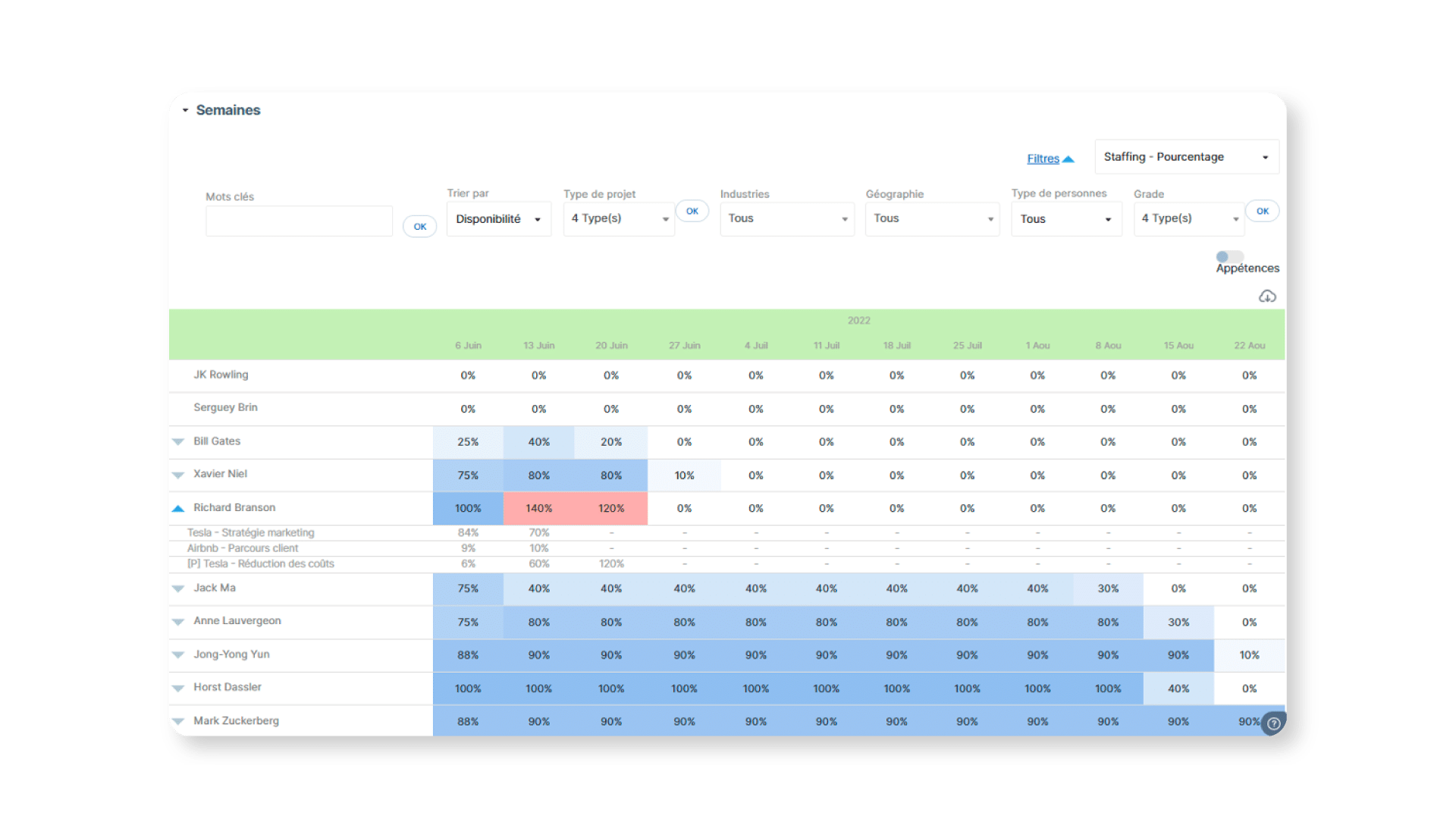
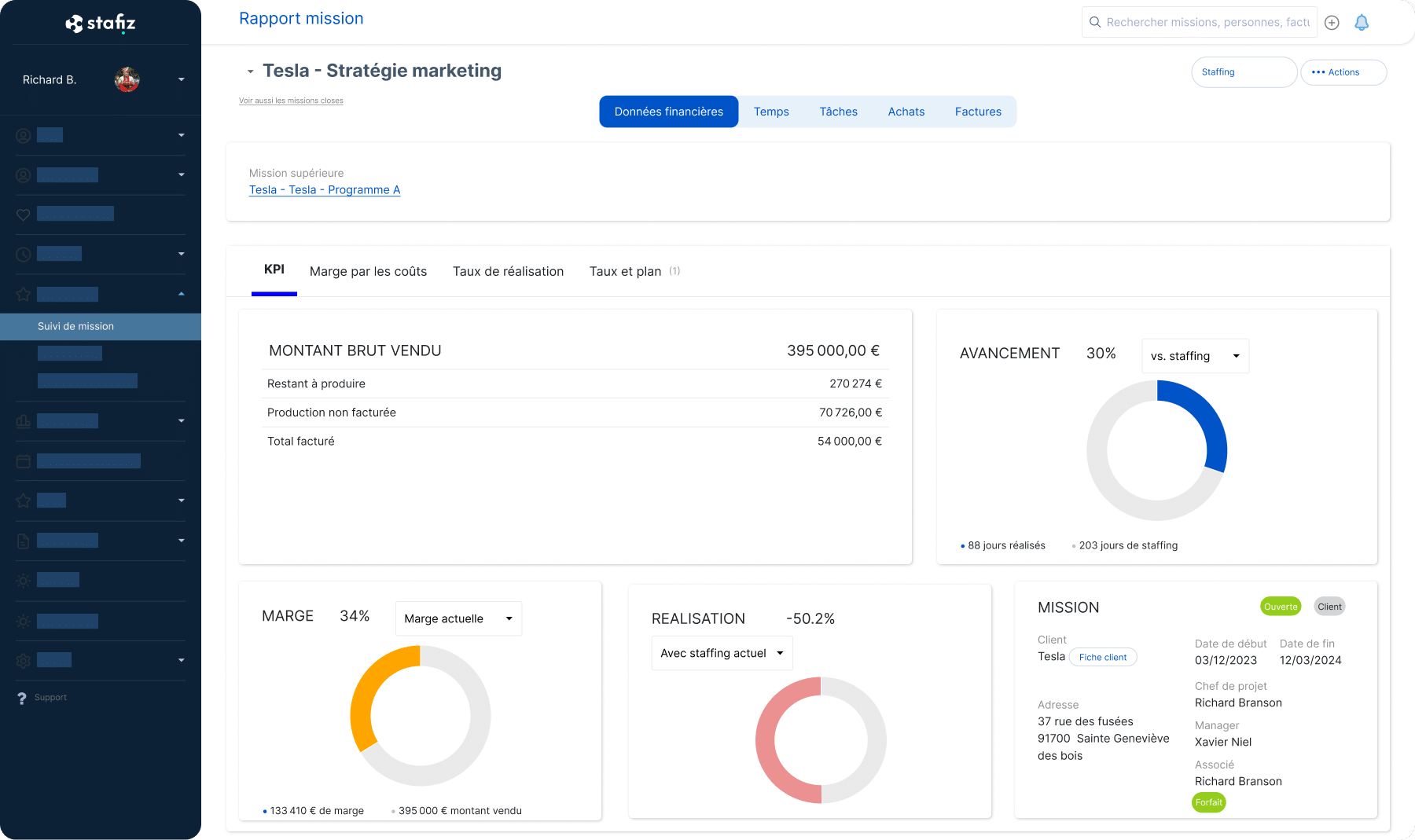
And because a successful scoping is only as good as its management, Stafiz transforms the scoping note into operational follow-up : resource planning, deliverables, budget, and landing in real-time.
Frequently asked questions about the project scoping note
No, the scoping note is not mandatory for every project but it is still strongly recommended.
Here are the cases where it is not necessarily necessary:
- a small software evolution, already well framed,
- a small-scale project carried out with an agile methodology, in a small team,
- when it comes to adjustments or iterations in a project that has already been launched.
The scoping note is a summary that lays the foundations of the project, while the specifications specifically describe all the tasks of the project.
The scoping note is generally used in the launch or pre-sales phase, while the specifications often mark the beginning of the project by intervening in the preparation phase.
The framework note cannot legally be used as a contract because it does not contain any legal clauses or provisions in the event of a dispute.
However, it can be used as a basis to formalize a commitment, by defining:
- objectives,
- the perimeter,
- roles,
- deliverables,
- the deadlines.
The scoping note is written by the project manager, sometimes in tandem with a PMO or a senior consultant in the IT Services and consulting firms. In the pre-sales phase, the sales team contributes to the short version of the document.
Validation, on the other hand, is collective : it involves the sponsor (on the client side or internal management), the steering committee and, when the project involves the client, its official representative. As long as this formal validation is not obtained, the grade remains a working document, not an enforceable reference.
These are four related terms, with distinct uses (also to be distinguished from the project charter, which contractually commits the sponsor to the scope, budget and milestones):
- Scoping note (or project scoping note): a 5-15 page internal summary document, written by the project manager to align stakeholders before launch.
- Framework letter : term used in two different contexts. (1) Synonymous with framework note in project management. (2) Budget document, in the public sector, sent by a hierarchical level (e.g. Prime Minister to ministers) to frame the financial margins of a financial year.
- Scoping sheet : a short version (often 1 to 2 pages) that summarizes the scoping document. Outside of project management, the term also refers to the "takeover scoping sheet" used in business takeovers (Bpifrance).
- Engagement letter : contractual document that formalises an assignment between a service provider and a client (consulting firm, chartered accountant, lawyer). It often relies on the framework note to describe the scope and financial conditions.
In practice: on an internal project, we speak of a note or sheet ; On a service mission, we speak of an engagement letter supplemented by an operational framework note.
A project scoping note is generally between 3 and 15 pages long, depending on the complexity of the project:
- 3 à 5 pages : projet simple, équipe restreinte, durée < 3 mois.
- 6 to 10 pages : medium-sized project, several stakeholders, duration 3 to 12 months.
- 10 to 15 pages : complex project, multi-team, transformation, duration > 12 months.
The format can be a Word or Google Docs document (the most common), sometimes a slide deck for the executive version (3-5 slides) intended for the management committee. The main thing is not the format but that the 10 key sections are all covered and that the document fits in a maximum of 30 minutes reading.
The framework note does not have binding legal value by default: it does not constitute a contract or a clause enforceable in the event of a dispute. It is a steering document, not a legal document.
However, it may acquire legal effect if it is:
- annexed to a contract or a letter of engagement : it then becomes an integral part of the commitment.
- Signed by the stakeholders : the signature marks the formal validation of the scope and commitments (without being a contract).
- mentioned as a reference in a specification or a public call for tenders.
In any case, the framework note alone remains an operational framework tool. To legally secure a project, provide a contract, a purchase order or a separate engagement letter.
The scoping meeting (sometimes called a scoping workshop) is when the project manager presents the scoping note to stakeholders for collective validation. It generally lasts 1 to 3 hours and brings together the sponsor, the project manager, the client (or his representative) and the business referents.
The standard agenda covers four parts:
- Presentation of the context and objectives (15 min).
- Review of the IN/OUT scope and deliverables (30 min).
- Validation of the actors, the macro schedule and the risks (30 min).
- Decisions and arbitrations (15 min): fixed scope, adjustments requested, next steps.
The minutes of this meeting serve as a formal validation of the framework. Without an explicit scoping meeting, the note remains a working document without a collective commitment.
The scoping note and the project plan are two complementary but distinct documents:
- The framework note lays the foundations (5 to 15 pages): why the project, what scope, which actors, what macro schedule. It is written before the launch.
- The project plan details the execution (often 30+ pages, multi-tab): WBS tasks, dependencies, resources assigned by task, operational milestones, communication plan, detailed risk plan. It is built after the scoping note, in the preparation phase, and serves as a daily reference for the project team.
In short: the project charter answers "why and what," while the project plan answers "how and who does what when." For a small project, the project charter may suffice; for a complex project, both are essential.
The scoping note is a living document: it must be revised as soon as an event changes the basis of the project. Five common triggers:
- Change of scope : addition or removal of a feature, a BU, a deliverable.
- Modification of the schedule : milestone shift of more than 2 weeks, extension of the project duration.
- Budgetary change : cumulative drift > 10%, extension or reduction of the envelope.
- Change of sponsor or key players : departure of the initial sponsor, change of project manager.
- New major risk : a risk not initially identified that threatens the achievement of objectives.
Each update must be reviewed by the COPIL and formally validated. A scoping note frozen in its initial state loses its operational reference value from the 3rd month of a long project.