Updated on 05 May 2026
The importance of project management control is significant for any project sales activity. Whether you are a IT Services, a consulting firm, a software publisher or integrator or an agency, the use of PSA software including management control features is recommended to gain in efficiency and reliability.
However, the choice of project management control software must be thought out: it is an investment in terms of both financial and human resources .
In addition, not all specialized ERPs for service companies are suitable for all types of structure.
To help you in this process, we offer you in this article a comparison of project management control software which lists 18 tools, classified by needs.
🔎 Key elements to remember
-
- This comparison of project management control software includes ERPs, PSA software and BI tools as well as their use cases.
- Depending on your project sales activity, certain choices of tools will be preferred.
- It is possible to equip yourself with a lighter tool if you are already equipped with invoicing software or resource planning.
- The main criteria for making your choice are options for financial tracking, integration with the resource planning and the billing methods supported.
Project Management Control Software Comparison
This comparison of project management control software addresses several needs, depending on the size of the company and expectations.
| Stafiz | Project Sale (PSA) | Complete (planning, invoicing, reporting), easy to use, French SaaS | Easy | SME / Mid-cap service company |
| Kantata | Project Sale (PSA) | Advanced financial management, multi-BU reporting, automations | Medium / Complex | SME / Mid-cap service company |
| Microsoft Dynamics 365 | ERP + CRM | Integrated, feature-rich, ERP + CRM, Microsoft ecosystem | Complex | Large companies |
| SAP S/4HANA | ERP | Historical, highly customizable, powerful ERP | Complex | Large groups |
| Oracle NetSuite | ERP | Advanced, multi-currency, multi-legislation financial features | Medium / Complex | SMEs / ETIs / Large companies |
| Sage X3 | ERP | Ergonomics appreciated, adapted to SMEs | Medium | SME / ETI |
| Cegid XRP | ERP | Adapted to the French legal framework, finance and reporting | Medium | SME |
| Odoo | ERP | Open-source, modular, customizable | Medium | SME / Large IT Services |
| Anaplan | Financial management | Complex scenarios, highly customizable | Complex | Large groups |
| Pigment | Piloting | More agile | Medium | Mid-sized / Large companies |
| Board | Financial management | Finance-strategy alignment, simulation | Medium / Complex | Large companies |
| Tagetik | Financial management | Powerful budgets and forecasts, scenarios | Medium / Complex | Large groups |
| Oracle EPM | Financial management | Regulatory, multi-entity reporting | Complex | Large groups |
| Power BI | BI and reporting | Microsoft integration, broad community | Medium | Any type of business |
| Table | BI and reporting | Interactive visualizations, aesthetics | Medium | Mid-sized / Large companies |
| Qlik Sense | BI and reporting | AI and ML for advanced analytics | Medium / Complex | Mid-sized / Large companies |
| Looker Studio | BI and reporting | Free, integrated with Google, simple | Easy | SMB / Large Enterprises |
Here is a selection of project management control tools suitable for theconsulting companies, agencies and IT Services where the business model is focused on project sales. In this type of structure, management control is then inseparable from project monitoring.
Stafiz, designed by and for service professionals
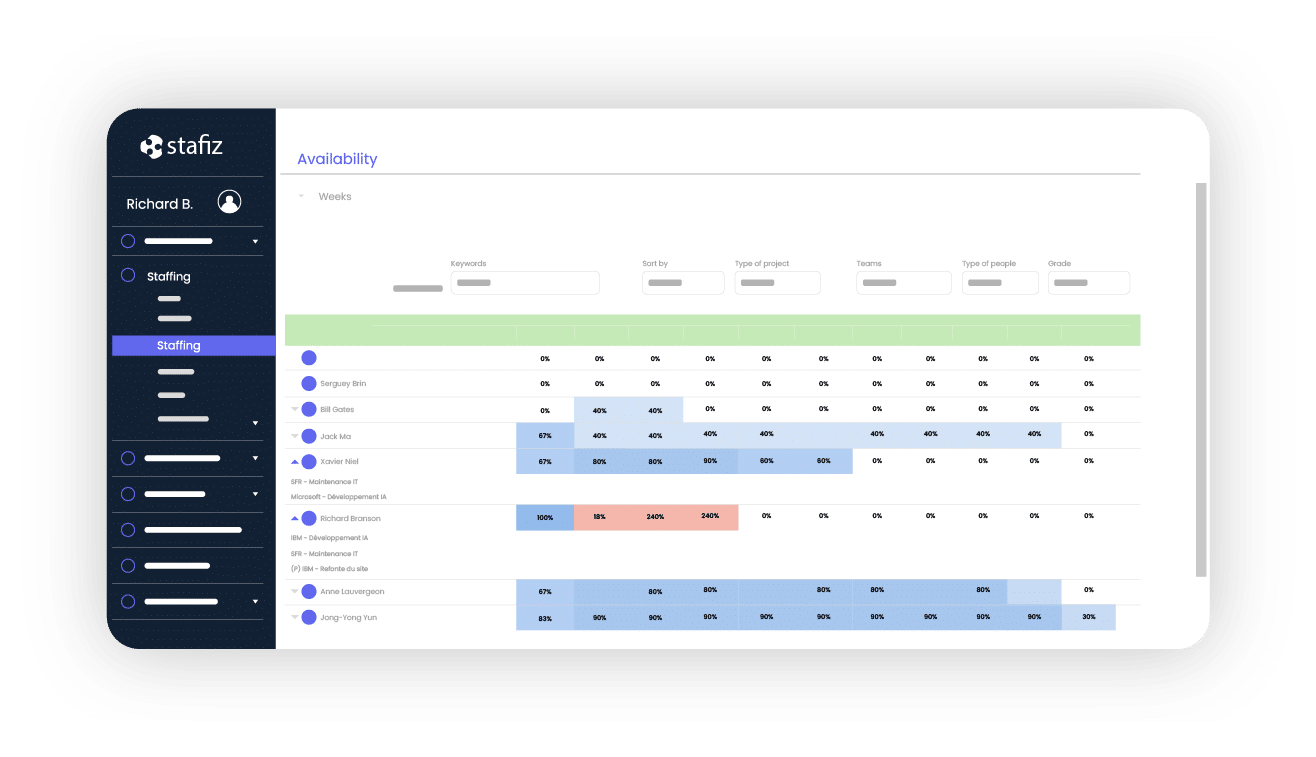
Stafiz is a SaaS PSA software that allows project management, workload and budget planning . Designed for service professionals, it allows the monitoring of costs and margins by project and by customer.
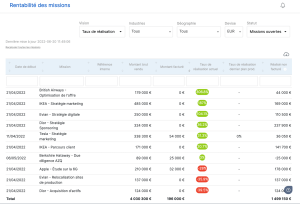
Aware of the challenges for this type of structure, Stafiz allows:
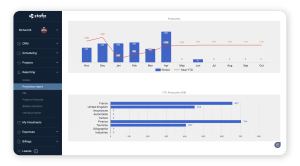
- a Multi-axis reporting to monitor performance;
- The utilization rate (or resource planning),
- occupancy rates,
- profitability per business or overall,
- gap analysis,
- the projected income statement,
- the follow-up of the remaining work,
- The Revenue recognition depending on the method of recognition chosen;
- recognition of the Board of Directors upon completion,
- recognition of the Board of Directors upon promotion,
- recognition of the turnover in direct management mode,
- recognition of the turnover in package/subscription mode,
- Automatic calculation of the margin at completion / the margin at landing
- invoicing follow-up as well as Automated invoicing ;
- bulk invoicing,
- Billing forecast,
- Tracking purchase orders (expiration alerts)
- monitoring of unpaid invoices and setting up automatic reminders,
- management of expense reports and rebillable expenses,
- resource allocation, even across business units;
- resource planning collaborative,
- integration of subcontracting,
- capacity planning and load forecasting,
- Skills matching through Stafiz's Smart Matching,
- pre-resource planning on mission opportunities,
- resource planning,
- project compatibility;
- management of FAE and BCP,
- management of pre-accounting,
- management of cut-offs (accounting closing),
- the forecast monitoring of activity and profitability.
Try Stafiz today!/b>
- Benefits
As a complete solution, Stafiz takes care of both operational management and project controlling. A French tool capable of supporting your growth, Stafiz offers a relatively easy to use ergonomics with a reasonable implementation time.
- Disadvantage
Stafiz does not support certain features like banking integration.
- Who is Stafiz for?
Service companies of any size looking for PSA software that offers features such as:
- centralization of data,
- budget planning and monitoring,
- resource allocation,
- invoicing,
- reporting.
Suitable for several company sizes, this business ERP offers you considerable time savings thanks to its automations and multiple alerts for exceedance or risk detection.
Kantata
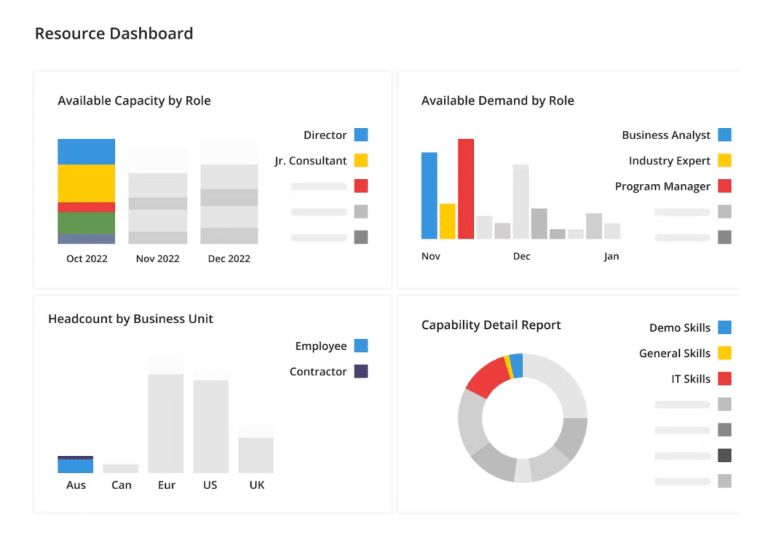
Kantata is a Professional Service Automation software and supports project management, finance, resource tracking, and invoicing. Like Stafiz, it is aimed at project sales activities with a strong need for visibility on projects, their costs, human resources and profitability.
Kantata specializes in business project management with a focus on financial control.
- Benefits
Kantata is known for its automation capabilities. The many resources (blog, podcast, white papers, case studies) make it easy to get started.
- Disadvantages
Personalization is sometimes pointed out. The interface and ergonomics are not always fluid. Some slowness is reported when it comes to processing large data. In addition, the learning curve can be high.
- Who is Kantata for?
SMEs that need to go far enough in terms of reporting, for example, with a need for multi-BU management, but who also have enough resources to configure and implement the tool.
💻 Alternatives: An often-cited alternative to Kantata is Sciforma, now owned by Planview.

Microsoft Dynamics 365, Microsoft ERP and Combined CRM
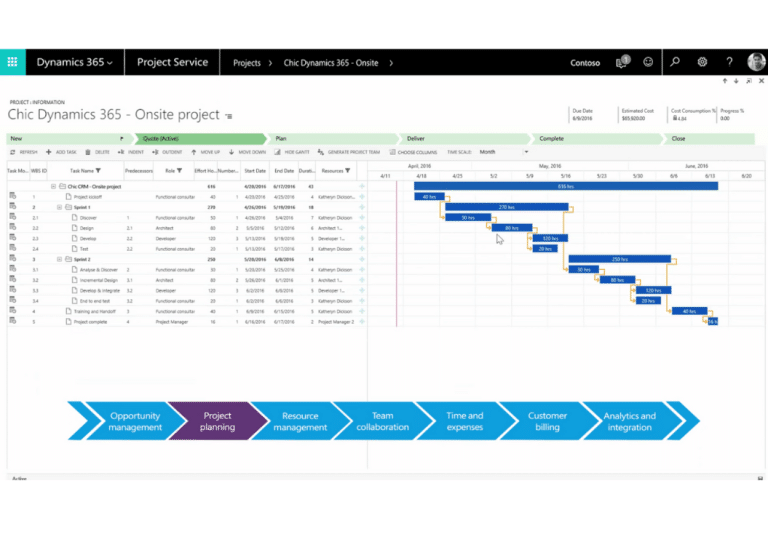
Microsoft Dynamics 365 is Microsoft's ERP and CRM solution .
- Benefits
Microsoft Dynamics 365 is a very comprehensive solution, rich in features and customizable such as:
- centralization of your business data,
- AI agents to automate business processes,
- Copilot integration,
- Real-time data tracking
- project planning and monitoring.
Moreover, this software integrates seamlessly with the Microsoft suite of tools.
- Disadvantages
This cumbersome solution is complex to use, with a high learning curve. Slowness and bugs are observed. The cost is high, and some features require the addition of modules and therefore an additional cost.
- Who is Microsoft Dynamics 365 for?
Mainly large structures with substantial financial resources, and time because the implementation can represent a large-scale project.
💻 Alternatives : SAP S/4HANA, SAP's ERP, is often cited as an alternative to Microsoft Dynamics 365.
Project management control tools for financial management
Some companies, such as large groups, have high financial management needs. This type of project management control software requires global management, as well as the establishment of provisional budgets, the creation of scenarios and often a high degree of customization.
Anaplan, the solution for complex scenarios
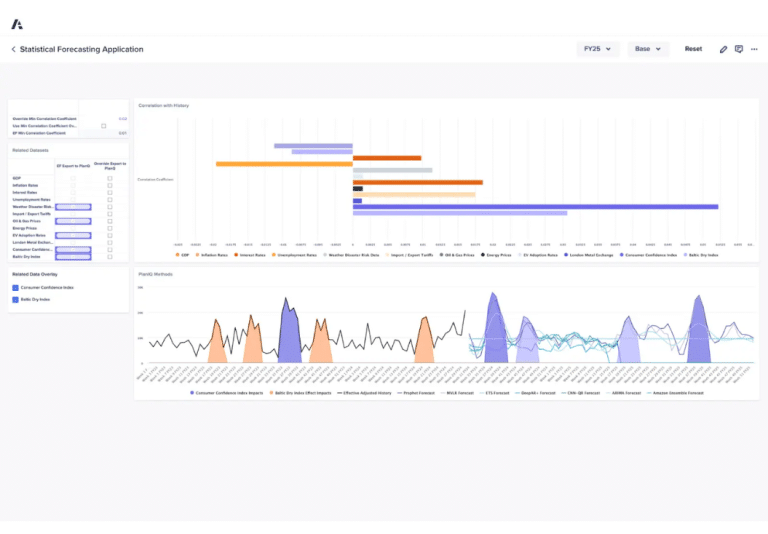
Anaplan is a comprehensive tool that provides project and portfolio planning, budget forecasting and management, resource management , and reporting.
- Benefits
Anaplan is powerful, and the use of AI makes it easy to model complex scenarios for budget forecasting, resource planning or costs. Anaplan is highly customizable and scalable.
- Disadvantages
This tool offers a wide range of possibilities in terms of customization, but everything has to be built. A dedicated and trained team is often needed to implement and manage the solution. The need for maintenanceis high. In addition, Anaplan has a high cost, to which must be added the services of consultants, which are not so common on the market.
- Who is Anaplan for?
Large companies and groups with high resources, both financially and in terms of resources.
Pigment, the French financial management tool
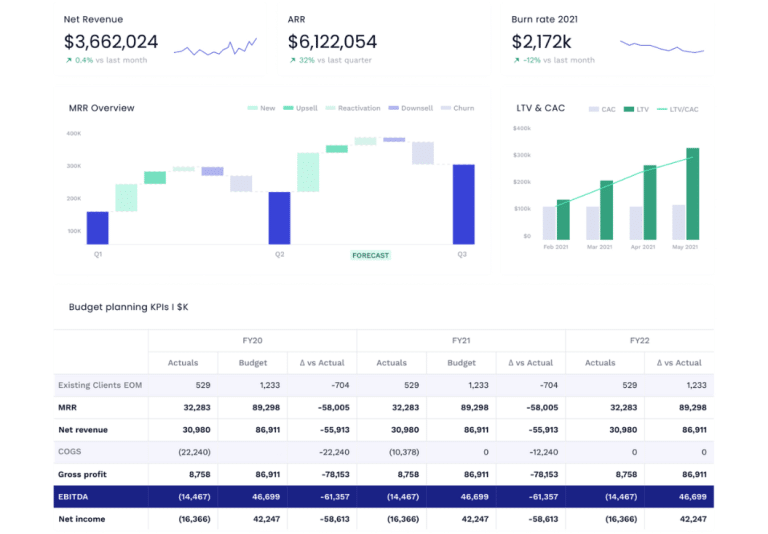
Pigment is an alternative to Anaplan, which is lighter and faster to deploy.
- Benefits
Pigment is a recent French solution. Created in 2019, the company has a reputation for listening to user feedback. It is renowned for its automations and flexibility.
Among its flagship features, we find:
- a wide range of reporting (histograms, curves, waterfalls or flowcharts),
- the generation of report documents from dashboards,
- instant collaboration tools (comments, tags, notifications),
- the creation of validation workflows,
- different levels of access to protect sensitive data.
- Disadvantages
Although Pigment's learning curve is more accessible than Anaplan's, it still requires a certain level of modeling knowledge. Pigment remains expensive and complex to set up for small structures.
- Who is Pigment for?
Medium to large enterprises, with multiple departments, financial resources, and resource capabilities to manage implementation and usage.
Other alternatives
Tagetik, Board or Oracle EPM are often cited as alternatives. These very complete solutions are mainly aimed at large groups such as banks or industries because they can be complex for SMEs.
Tagetik allows you to simulate scenarios and model budgets. On the other hand, this solution is less designed for day-to-day operations and offers fewer possibilities for monitoring tasks and schedules. This is a high-priced solution that requires qualified profiles for implementation.
Board is adapted to align the financial department with the operational and strategic aspects. It is aimed at large companies that want to predict and simulate the impacts of projects on profitability.
Oracle EPM is primarily aimed at large companies with multiple entities and currencies that have regulatory reporting needs. Complex to implement, customize, and use, Oracle EPM requires the intervention of specialized resources or even partners.
ERPs and Integrated Solutions with Management Control Modules
In this section, we will focus on ERPs that offer management control modules. This type of solution is aimed at structured companies, which want a unified information system, thus connecting finance, project and HR.
SAP, the historical ERP
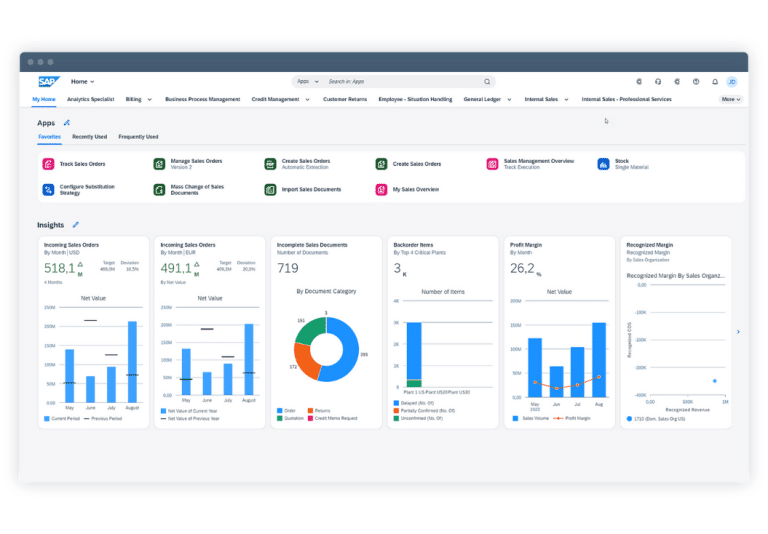
As the leader in the ERP market, SAP is mainly aimed at large groups and multinationals, although some modules of the solution are more aimed at SMEs.
- Benefits
SAP offers a wide range of features. SAP is highly customizable and is designed to integrate with other tools.
- Disadvantages
This solution is complex to implement and maintain. It requires specialized consultants or partners and is expensive. It is also difficult to use.
Oracle Netsuite, the ERP to understand growth
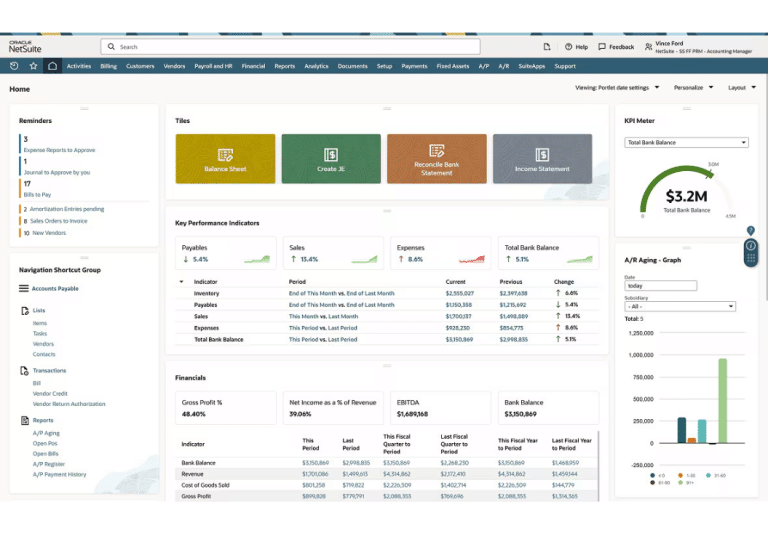
Oracle Netsuite is popular with companies with high financial needs. Indeed, it offers many advanced features in this area, especially with full integration with accounting. It allows global management with multi-currency or multi-legislation.
- Benefits
Oracle Netsuite offers powerful financial capabilities for global contexts.
- Disadvantages
Customization is complex to set up and may require the intervention of dedicated partners or experts.
Sage X3, the ERP more accessible to SMEs and mid-caps
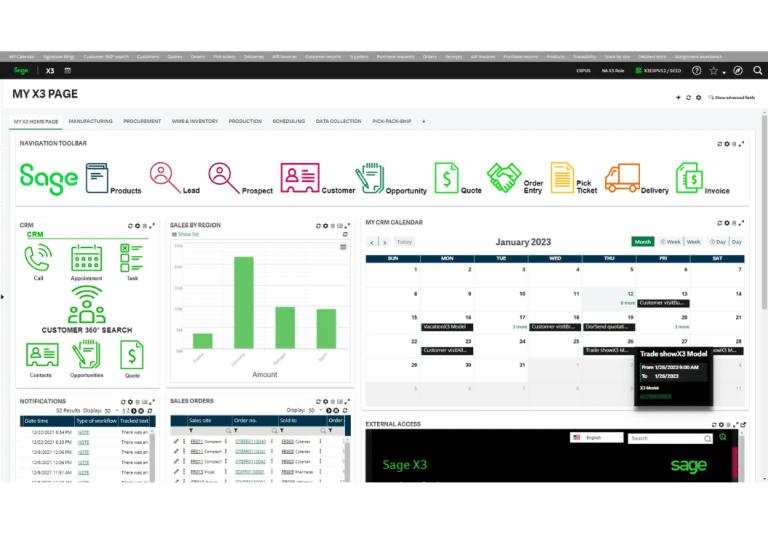
Sage X3 is a robust ERP that offers dedicated modules for finance, supply chain, production, logistics and sales.
- Benefits
The features are comprehensive. Sage X3 is customizable and its ergonomics are considered more pleasant than those of its competitors.
- Disadvantages
Sage X3 is perhaps less suitable than SAP and Oracle Netsuite for very large companies that need to manage multi-country. There are fewer partners than for SAP and Oracle Netsuite. Like many of the ERPs on this list, Sage X3 is complex to use.
Cegid XRP, the ERP adapted to the French legal framework
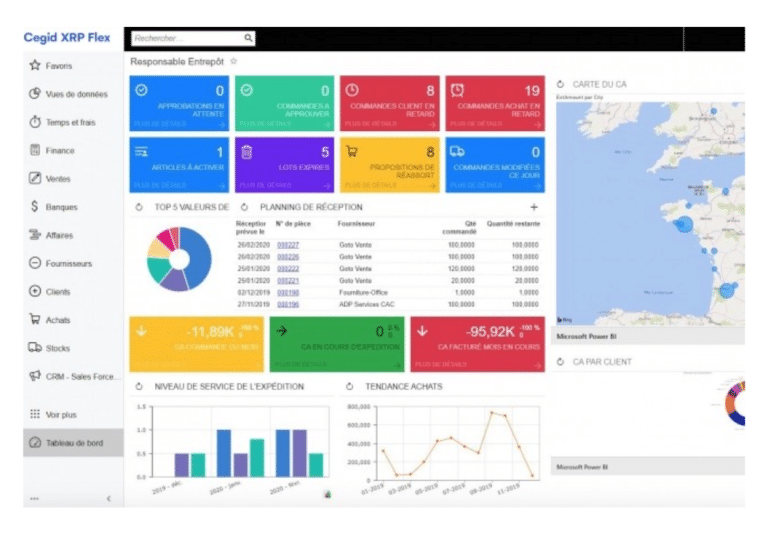
Cegid XRP covers the needs of finance, HR, commerce, and offers management and reporting features.
- Benefits
Cegid XRP is a French solution that understands the needs and specificities of France when it comes to taxation, accounting or regulatory framework.
- Disadvantages
This solution is less recognized internationally, and therefore less suitable for global management.
Odoo, the modular open-source ERP
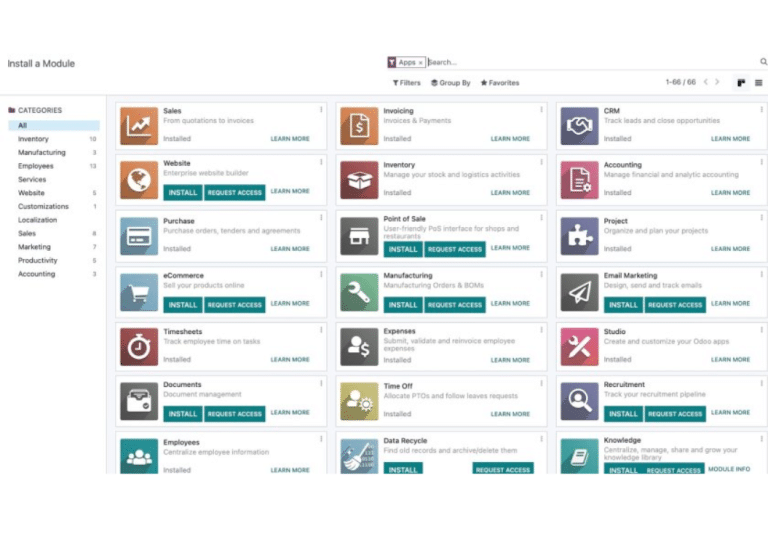
Odoo is a Belgian software, which exists in two versions: open-source and premium.
- Benefits
Odoo is more accessible in terms of user experience. This software is highly customizable and offers a wide variety of configurations. Implementation is easy, and many integrators are trained to help you get started. Its intuitive user interface is appreciated.
- Disadvantages
The pricing policy is often raised, considered aggressive. Odoo remains cumbersome, however, also requiring the involvement of a partner.
BI & Reporting Solutions for Project Management Control
Although the software we are now going to present to you is not strictly speaking project management control software, it can integrate with it to help you exploit and visualize the data while adding an analytical layer. Thus, they do not cover the project accounting logic and need to be connected to an ERP.
Power BI, the historical BI tool
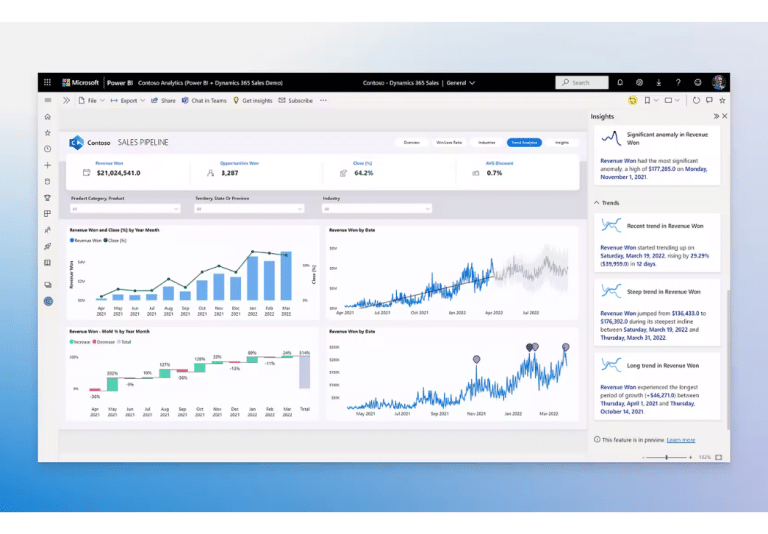
Power BI is a powerful data visualization tool, part of the Microsoft suite.
- Benefits
Power BI is a historical tool in the field of data visualization, which allows it to have many tutorials, connectors and a large community. Power BI offers many features. Owned by Microsoft, it integrates effectively with the other tools in the suite, including Excel, Azure or Microsoft Dynamics 365.
- Disadvantages
Power BI can be cumbersome to use if it processes very large volumes of data. The visualization options are smaller and less aesthetically pleasing than with Tableau. Power BI can be complex to use without training.
Tableau, the design and interactive visualization software
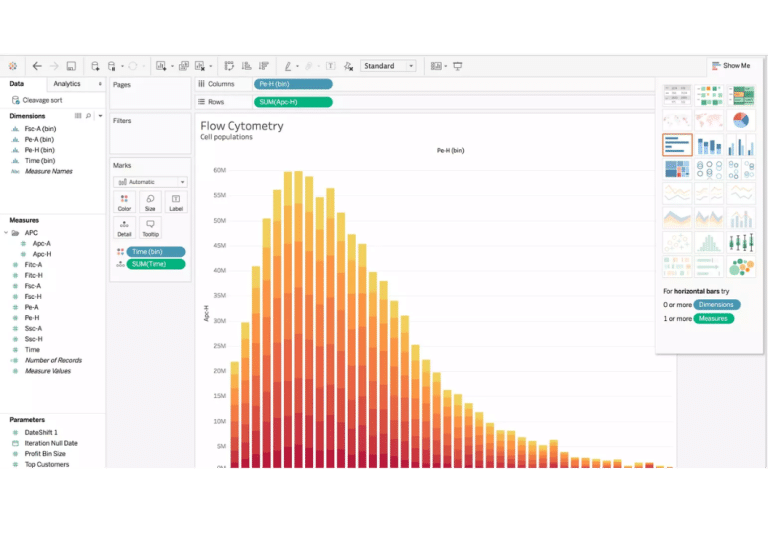
Tableau is a data visualization tool now owned by Salesforce.
- Benefits
Tableau allows for great flexibility in the choice of visualizations. The visuals are interactive and attractive. Tableau is well connected with all the tools in the Salesforce suite because it is now part of its ecosystem. There are many extensions and a large community.
- Disadvantages
Tableau can sometimes require some technical skills and the learning curve can be long.
Qilk Sense, the analytics solution that uses AI and ML
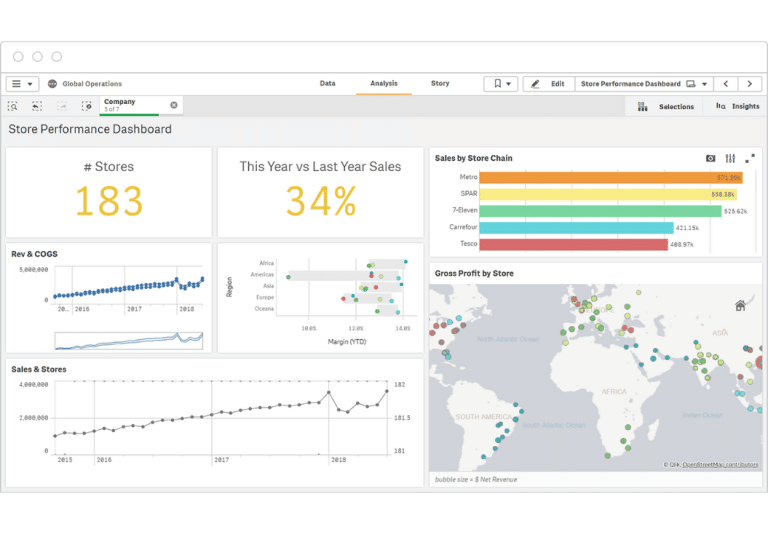
Qilk Sense is a data visualization tool that uses AI and machine learning to deliver an advanced level of analytics.
- Benefits
The many features, enhanced by AI, make Qilk Sense a powerful and efficient software.
- Disadvantages
The learning curve can be complex and requires data analysis skills.
Looker Studio, Google's data visualization tool
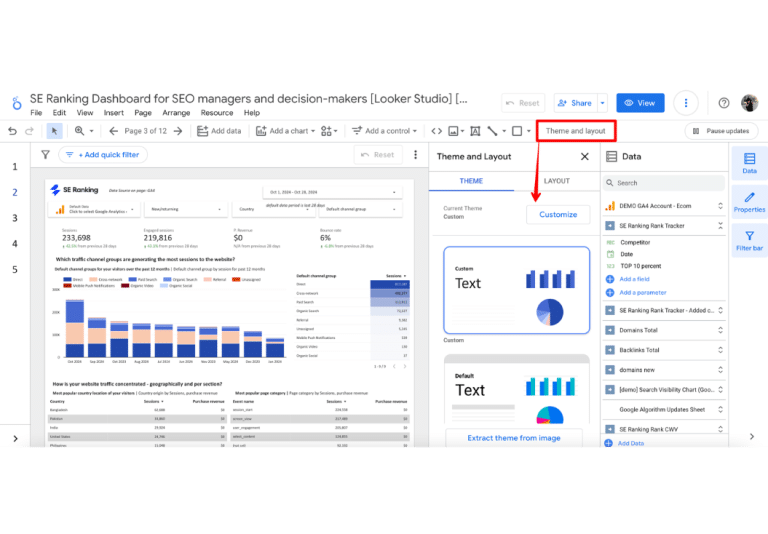
Looker Studio, formerly known as DataStudio, is a data visualization software, part of the Google suite.
- Benefits
The free version is convincing. Integrations with Google tools are made easy. The tool is relatively simple to use and learn.
- Disadvantages
Looker Studio has a few bugs when it comes to processing large amounts of data. Customization is complicated. Support is limited for the free version.
What criteria should be taken into account when choosing your project management control software?
As seen above, there are as many tools as there are needs. And if some of the software in our comparison seems similar to you, we have put together a list of criteria to take into account when choosing your PSA tool for the management control of your projects.
The granularity of financial monitoring
A traditional ERP is able to combine the different costs and margins while respecting the legally applied methods. But to manage projects and ensure management control, it is essential to be able to take advantage of different analytical views in order to be present on all fronts and intervene before the deviation takes place, or the risk turns into a real loss.
Your tool must therefore allow multi-axis monitoring to allow you to analyze:
- the margin per mission,
- profitability per customer in order to analyze the potential differences between regular customers and new customers,
- performance at the level of a business unit or by department.
It is with multi-channel granularity that your PSA software will be able to alert you to risks as soon as possible. It also becomes easier for management to navigate between the performance of the project portfolio, and to make informed decisions thanks to complete and accurate data. This is one of the major limitations of ERPs such as SAP or Oracle Netsuite when they are used without a PSA layer: the project data is drowned in the general accounting.
Forecasting: quality forecasting
To carry out a good project management control, it is not enough to know what happened. You need visibility on future predictions and this quickly: there is no question of making complex calculations manually to define the forecast of load, turnover or margin. This would leave room for inevitable human errors, and above all, you would not have the information in real time.
However, to arbitrate on strategic decisions, you need accurate, up-to-date and easy-to-access data.
Your PSA tool must be Powered by the resource planning in a synchronized and dynamic way. Thus, the system is able to inform you of who is working on what, for how long, what the next availability of an employee will be, and above all integrate potential changes during the project.
Financial management tools such as Anaplan or Pigment are excellent for macro scenarios, but do not go down to the mission grid. BI tools (Power BI, Tableau) do not produce this forecast natively: they display it if they are connected to a reliable and up-to-date data source.
The connection between the resource planning and finance
This criterion, although so structuring, is often neglected in the evaluation of software. Most BI tools and some ERP in the comparison do not natively integrate the resource planning and financial management: they should therefore only be selected if you have a planning tool. If you manage your resource planning on Excel, on the other hand, go for a complete tool like Stafiz. Spreadsheets are still difficult to integrate with tools, and automating them is a real headache.
Such fragmentation between project financial monitoring and resource management creates blind spots: it is not known whether the planned expense corresponds to really billable turnover, or whether the margin differences come from a sub-expense.resource planning, over budget, or underbilling.
A true PSA software for project management control therefore integrates its two parts of the management to keep data synchronized and up-to-date.
Support for various billing methods
Consulting firms, IT Services and agencies rarely charge according to a single billing model. Depending on the project, the client, or within the same project, it is possible to use different types of invoicing: a crucial detail that must be anticipated when choosing your tool. Otherwise, the reconciliation between time spent and invoiced amounts remains manual, and therefore time-consuming and fallible.
For example, it is possible to practice with the same client:
- a self-employed party to provide technical assistance,
- a part in a lump sum, generally the amount sold of the overall project,
- and sometimes even subscriptions (managed services).
This is the breaking point of generalist ERPs : they can manage traditional invoicing but not the CRA (activity report) workflow → verification and validation → invoicing → purchase order specific to the IT Services, nor the tracking of progress at earned value for packages.
The adequacy between PSA software and operational mode
Needs vary significantly depending on the type of structure.
A IT Services Above all, it needs a customer-validated ARC, a follow-up of purchase orders and an automated invoicing workflow.
A consulting firm is looking for a fine capacity planning (which is available in 6 weeks?), a follow-up of the margin at completion and a reporting by partner/associate.
An integrator (or Professional Services company) often manages TMAs, on-call duties and subcontracting in cascade.
An ERP like SAP technically covers all this, but at the cost of disproportionate complexity and implementation costs for structures with fewer than 500 people. BI tools, on the other hand, have no built-in business logic: they visualize data but don't structure it. Only adopt this type of software if you have a resource planning next door.
Frequently asked questions:
There is no best universal project management control software, as the choice depends on the specific needs, size, and industry of the business.
- Fewer than 50 employees: Opt for simple tools.
- Between 50 and 500 employees: Adopt a specialized solution.
- More than 500 employees: turn to business solutions coupled with powerful EPM tools and integrated with the existing ERP.




 WEBINAR STAFIZ