
Updated on June 30, 2026
The activity report (CRA) declares the time per project and conditions, in a service company, invoicing and margin.
An activity report (CRA) is a summary document by which an employee, employee or consultant, declares the time spent per project, the tasks carried out and the progress over a given period. As a service company, it feeds directly into customer invoicing and margin management.
In a IT Services or a consulting firm, the consultants' time is the billable raw material. However, it is still often declared in scattered Excel files, validated late and copied by hand when invoicing. Billable days are being lost, the margin is discovered too late and invoicing is delayed.
Well filled, the CRA reverses this logic. It becomes the starting point for a reliable chain from time entry to invoicing and gives management an accurate view of the actual activity.
This article details what a CRA is, how to write it as a service company, what a completed example looks like, and how to leverage it to drive profitability.
🔎 Key elements to remember
- The CRA declares, per project, the time spent by a consultant; In a service company, it triggers invoicing and margin calculation.
- Employee, freelancer or umbrella company: the CRA does not have the same role depending on the status.
- It is entered as it happens and is validated each month, before feeding the customer bill without re-entry.
- On the management side, it feeds the key KPIs: billable utilization rate, planned/realized variance, profitability per project.
CRA: what is an activity report?
Time report: definition
The acronym CRA stands for activity report and corresponds to the activity report over a given period.
The activity report takes the form of a report and is usually produced by a consultant or employee to justify the work done or the skills acquired during a project.
The activity report includes: the objectives initially set, the progress of the project, the developments to be followed.
It is therefore particularly useful for service companies because it informs the customer of the status of the project.
The CRA of an employee, a freelancer or an umbrella consultant
The role of the CRA changes according to the status. For a salaried consultant in IT Services or in a consulting firm, it is used to allocate time to client projects and to trigger invoicing, as an internal management tool. For a freelancer or an umbrella employee, it is mainly a contractual obligation towards the umbrella company, which justifies the days invoiced.
What is the goal of a time report?
The ARC makes it possible to check the progress of the project, the working time, the workload and the productivity. Thus, it reports on the time spent, the tasks completed and any difficulties.
Communicate progress and justify time spent
The activity report serves several purposes depending on the writer.
- The CRA for employees allows them to demonstrate their progress to their manager (especially when teleworking).
- The consultants' activity report is used to present the work accomplished to their client.
Inform and reassure the client, manager or investor
One of the first objectives of the CRA is to inform. Thus, a clear and structured activity report improves communication with the client, manager or investor at the origin of the request.
The activity report presents a progress and an assessment. While it can be used to justify, it must not attempt to convince or argue. An effective ARC can provide an inventory that helps in decision-making.
Track productivity through time reporting
Productivity monitoring is a key objective of activity reporting.
Through rigorous time tracking, the person in charge of writing a CRA obtains accurate data on their performance and can optimize their work. The resulting ARC ensures traceability, improving overall visibility.
Optimize resource management in IT Services
Finally, the third objective of the ARC is to improve the management of resources. This is a valuable tool for IT Services and companies using consultants.
Required by the hierarchy, partners or customers, the activity report paints a realistic picture of the time spent. This visibility allows you to reallocate resources, review workloads, and bill more accurately.
Generate decision-making
The activity report must be used to inform decision-making. Thus, it helps to: reorient the management of a project, carry out preventive and corrective actions, adjust workloads, build up a history in order to facilitate the preparation of subsequent projects.
What are the different types of time reports?
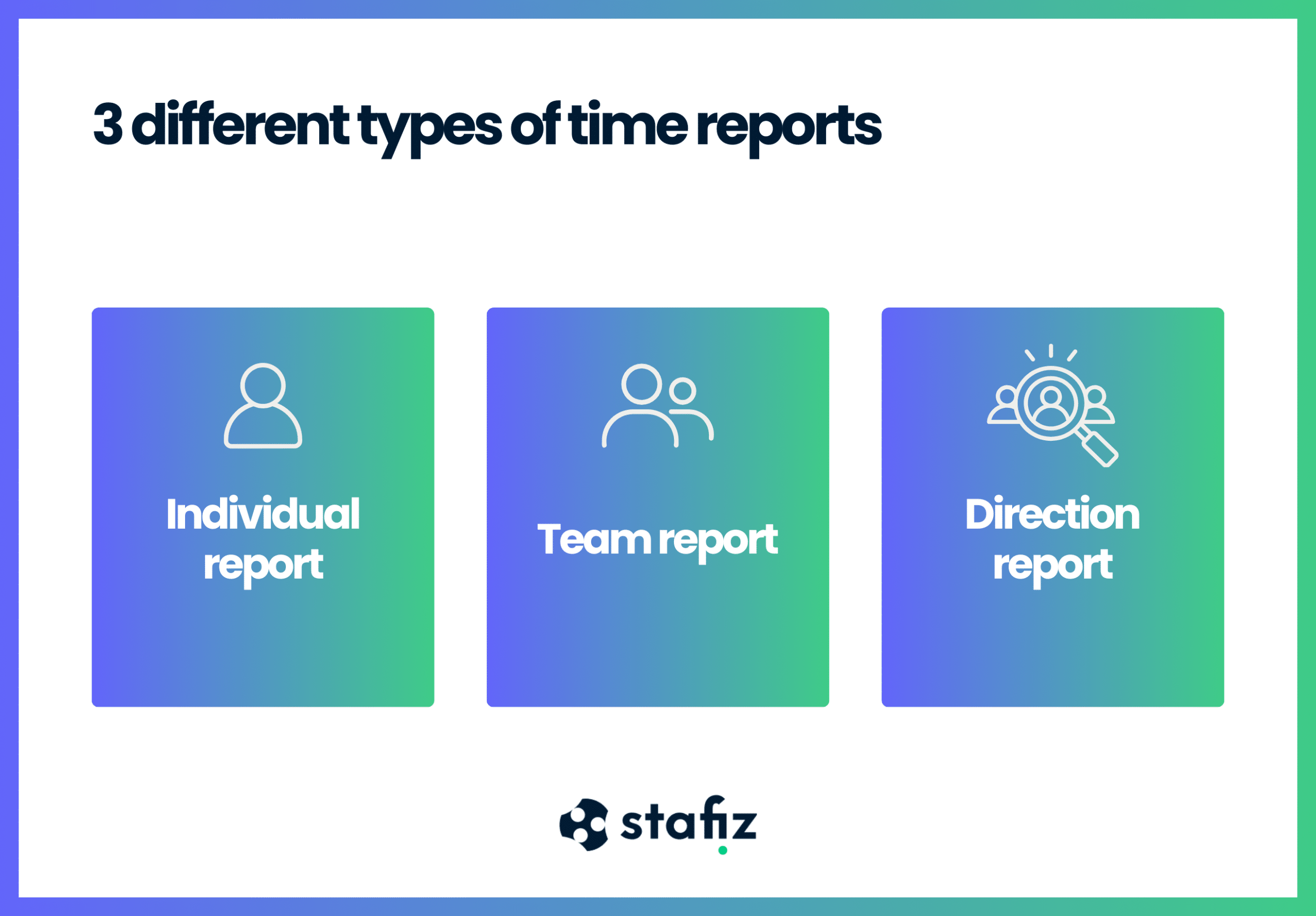
There are 3 different types of activity reports: the individual CRA, the team CRA, the CRA for management.
Individual time reports
The individual activity report is the most common. It is required of a consultant, a salesperson or any other type of employee to justify his time allocated to the tasks of a project.
Team time reports
The team activity report works in the same way as individual CRAs, but they provide information about the overall activity of a team. This is the case, for example, of associations under the 1901 law whose statutes mention the obligation to produce an activity report.
In this context, the report in an association becomes a legal obligation.
Time reports for management or investors
Executive CRAs provide material to inform decision-making and support the strategic vision.
They can also be used to reassure potential investors, by reporting: on the activities carried out, the rest to be done, the next steps to come, as well as the results obtained.
While the progress report presents the progress to the operational team, the activity report justifies the work done and provides credibility.
The progress report is usually produced by the project manager and is sent out on a regular basis. On the other hand, the activity report is sent by an employee or consultant to his or her manager or client, and often on request on an ad hoc basis.
Common issues and challenges of time reports
Collect reliable data
Limit errors and oversights
One of the biggest challenges in reporting is getting reliable data to build on.
Indeed, time tracking must be accurate and regular to remain relevant. It is impossible to be vague or approximate!
To limit this risk, use a real-time time tracking tool .
Supporting strategic decision-making
The ARC, by providing key information on the skills and tasks performed, feeds into strategic decision-making.
⚠️ We recommend being particularly vigilant about mistakes that could impact your projects, or even the rest of the project portfolio and consequently, the credibility of your company.
On the management side: making the CRAs of an entire team more reliable
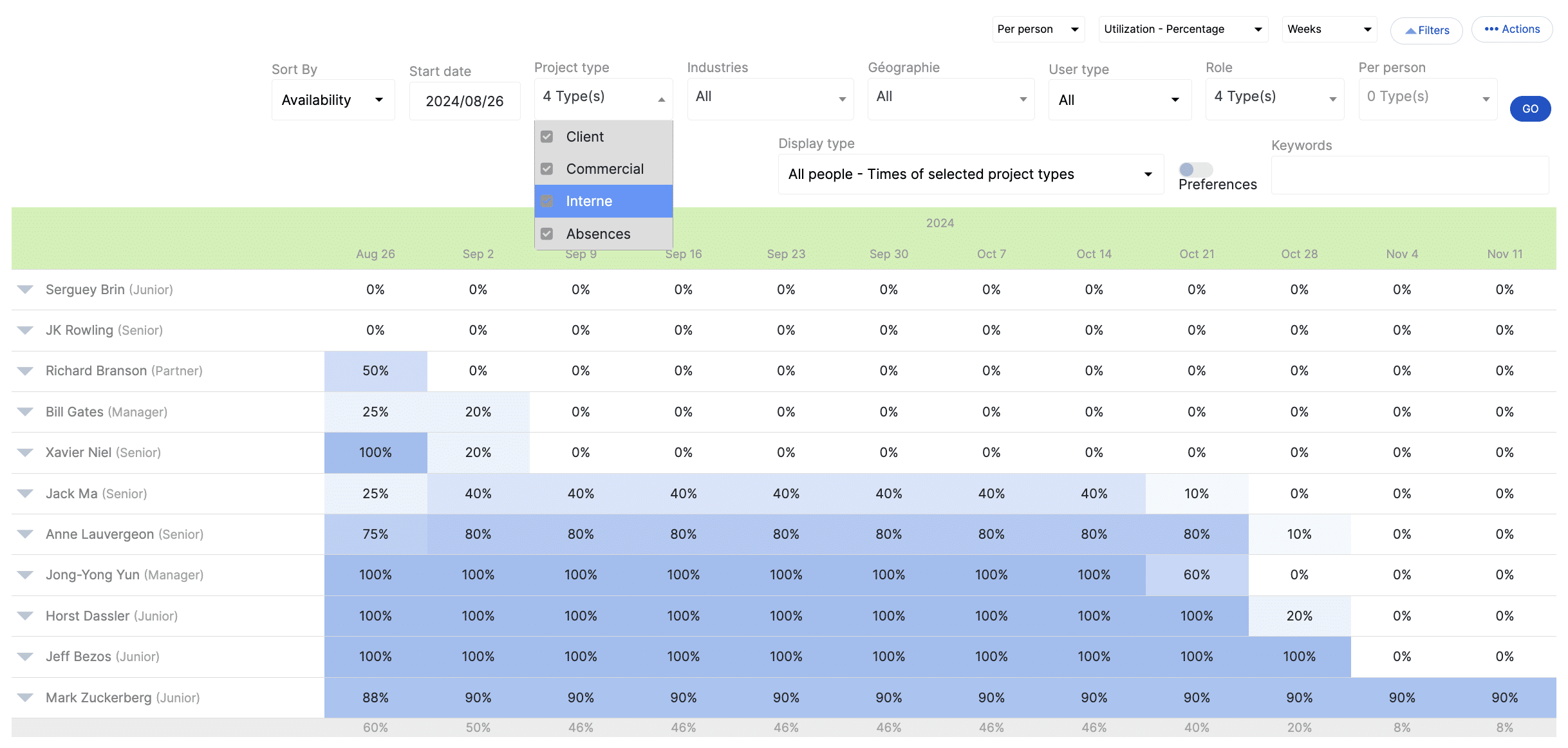
For an operations director, a financial director or a human resources manager of a service company, the difficulty lies in the reliability of all the CRAs, not in an isolated document. When some of the consultants enter late or approximately, invoicing and the margin vision drop off. Three levers make the whole thing more reliable: a single format for all, a clear validation deadline (who enters, who validates, who unblocks invoicing), and a follow-up of the utilization rate to identify the inter-contract and rebalance the assignments.
Best practices for collecting reliable data
Here are some tips to limit data collection errors:
- determine the objectives to be achieved from the preparation phase;
- Identify the data to be collected (e.g., time spent per task).
- Raise awareness among teams about the consequences of oversights and errors.
This collection task is often neglected by employees. Indeed, it is often considered to have low added value compared to other more billable tasks. Hence the importance of communicating about its importance and its challenges.
Ensure compliance with contractual commitments
It should be noted that there are contractual requirements of IT Services to customers. The CRA responds to a need for traceability and impacts the compliance of services. The financial aspect is concerned, as well as customer relations.
Secure invoicing and profitability of projects
The CRA contributes to rigorous and reliable budget monitoring by providing accurate data. Thus, invoicing is carried out as accurately as possible, thus guaranteeing margins and the good financial health of the company.
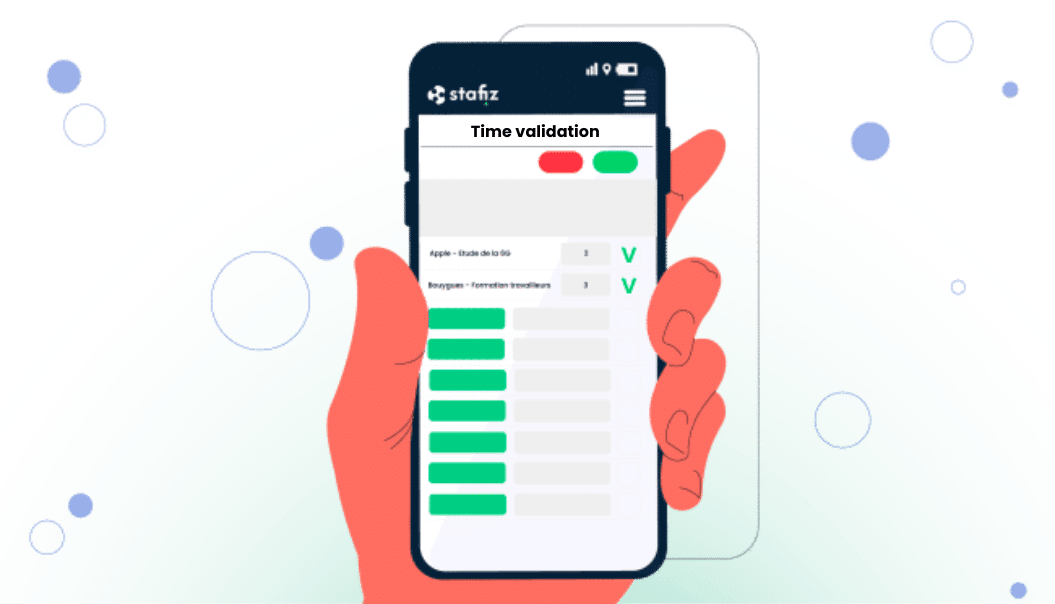
In a service company, the CRA is the first link in the billing chain. Once entered and validated by the manager, it feeds directly into the customer invoice: no more re-entry, less forgetting of billable days. This continuity protects the margin: it avoids uninvoiced days worked and feeds into the monitoring of the billable utilization rate (activity rate, holidays excluded) and the landing of the margin project by project. For a consulting firm as well as for a IT Services, the margin is managed continuously instead of being recorded at the end of the mission.
Budget monitoring of projects, in anticipation
See Stafiz in action in 2 minutes
Maximize productivity
The activity report is a valuable tool for plan the management of the resource planning. Indeed, it makes it possible to organize assignments accurately and to balance workloads .
In addition, the CRA supports the monitoring of individual and collective project performance because it makes it possible to identify the strengths and weaknesses of each individual. This helps to alert on the need for training or recruitment to improve productivity.
How to write an effective time report?
What is the content of a time and activity report?
Here is an example of an activity report to help you produce or consult an effective document.
- The context and objectives of the project: the name of the project, the people involved, the date, the duration and the overall context of the project.
- Objectives achieved and tasks accomplished: the work done and the deliverables. Fill in the durations and resources needed.
- The results obtained: Be specific and use numbers to justify results.
- Difficulties or risks: come back to the obstacles encountered and the solutions proposed to overcome them.
- Differences between planned and realized: highlight the time differences observed over the period through a timesheet.
- Next Steps: A reminder of the next steps to come. Use this space to share recommendations if there are any a.
- The conclusion.
- Any annexes if the recipient wishes to have more details.
Example of a completed activity report (consultant in a service company)
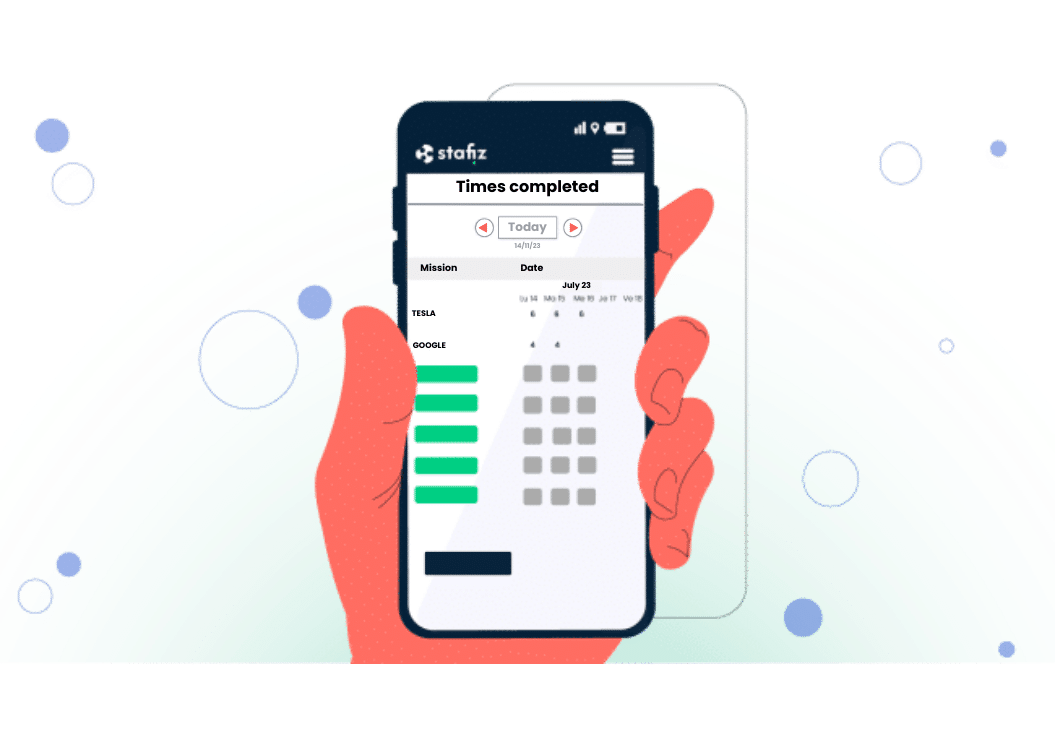
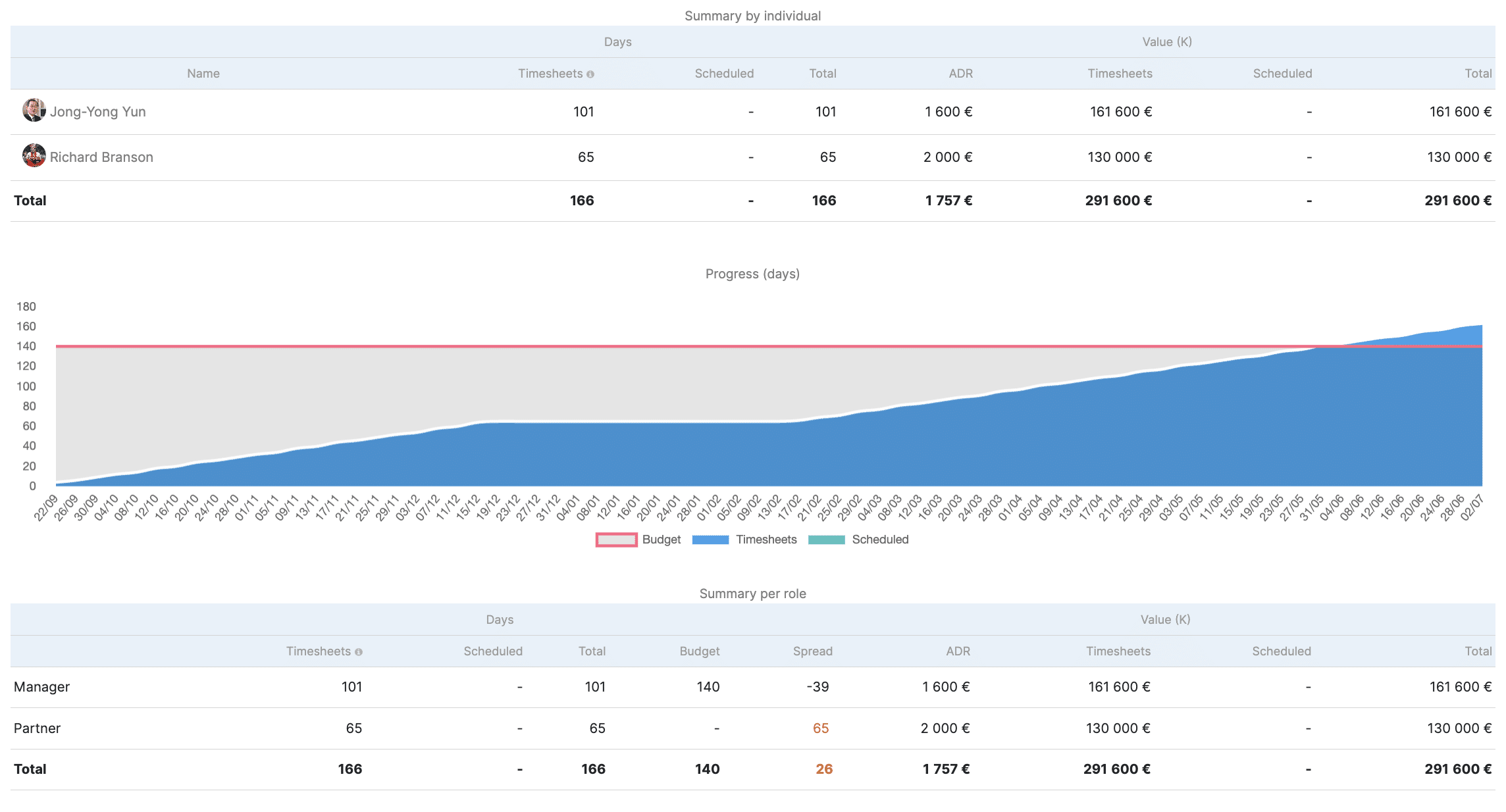
A salaried consultant divides his days of the month between several clients and projects, distinguishing between billable, leave and intercontract. In Stafiz, this entry is done directly by project, in fractions of a day.

On the screen above, the consultant has entered his days on two missions: an AI development for a client and the redesign of a site. Carried over a full month, his activity report looks like this.
| Week 1 | Client A, ERP project | Billable advice | 5 |
| Week 2 | Client A, ERP project | Billable advice | 4 |
| Week 2 | Leave | Absence | 1 |
| Week 3 | Client B, scoping | Pre-sales | 2 |
| Week 3 | Intercontract | Formation | 3 |
| Week 4 | Client A, ERP project | Billable advice | 5 |
| Total Month | 16 billable, 1 leave, 3 inter-contract | 20 j |
Once validated by its manager, this CRA directly feeds into Customer A's invoice and the calculation of its billing rate.
How often should I fill out a time report?
In a service company, the activity report is most often monthly, based on the billing cycle. The entry is done as it happens (every day or every week) to remain reliable, then the CRA is validated and sent at the end of the month.
Some missions impose a tighter pace: weekly reporting on fixed-price projects with short milestones, or even daily reporting on actual billed advertising agencies. The IT Services, on long assignments, work mainly on a monthly basis, whereas an agency can follow on a weekly basis.
Best practices for good activity reporting
Now, you still need to follow three rules to write effective activity reports.
- Keep it concise and structured: Be precise and focus on synthesis to make it easier to read.
- Justify your statements with figures and key indicators: you can set up a timesheet validation system, for example.
- Choose a readable and clear format: ideally, integrate graphical representations, tables and lists.
Analyzing a time report: the right KPIs
Some indicators are particularly interesting to follow when analysing an activity report. There are dozens of them; Here are the main ones for a service company.
The billable activity rate (billable utilization rate)
The billable utilization rate (activity rate, excluding holidays) measures the proportion of time actually billable over the time available. A consultant with 70% of billable utilization rate leaves nearly a third of his time unsold. The CRA, which distinguishes between billable and inter-contract and leave, feeds directly into this calculation and reports deviations before the margin deteriorates.
Time spent by activity
This activity reporting indicator can reveal several shortcomings, including: a shortage of resources, insufficient skills, a lack of motivation.
By having a view of this indicator, you can identify the need for outsourcing, training or reallocation of resources.
Originally planned time compared to actual production time
This indicator helps you identify and analyze the gaps between the forecast and the actual. This may require you to review your schedule or resources in order to stay aligned with the initial budget. This indicator is essential to maintain the profitability of the project.
Rate of achievement of objectives
This indicator allows you to monitor the objectives over a defined period of time in order to identify any gaps. This then involves carrying out corrective actions, such as reviewing the allocation of resources on a project or setting up training.
In addition, this KPI is particularly important for employees whose remuneration is variable and depends on the achievement of objectives.
Profitability of the project
Several indicators can be used to calculate the profitability of the project, such as the expected time compared to the time spent or the rate per activity. The billable work rate is another relevant indicator for consulting companies to monitor.
Indeed, the work done by a consultant is not always billable in full, hence the importance of defining appropriate daily rates to be invoiced. Calculating the billable work rate will allow you to distinguish the most productive employees and identify opportunities for optimization, helping you maximize the profitability of projects.
Conclusion
The activity report is an essential document that must be mastered in a company.
Thus, meticulous time entry using software such as Stafiz makes it possible to meet this need for traceability.
Other features such as 1-click invoicing from an activity report or the monitoring of resources and productivity facilitate project management to guarantee productivity and profitability. For the definition of CRA software and its functions, see our glossary.
Frequently asked questions:
The activity report (CRA) is a more concise and frequent document, focusing on the tasks carried out, the time spent and the problems encountered over a short period of time. The activity report is more comprehensive: it covers a longer period and includes analyses, financial statements, conclusions and strategic recommendations.
A good activity report should have several key sections: an executive summary, details of activities and billable hours performed, and the status of current goals and projects. It also includes performance indicators (KPIs), obstacles encountered and next steps or strategic recommendations.
Excel or Word are suitable for one-off needs. A service company is well advised to switch to a specialized tool, such as a Professional Services Automation (PSA) tool or an integrated timesheet. With a tool like Stafiz, data entry is done on mobile or on a timer, with day, half-day or hourly granularity; a validation manager workflow frames everything, and invoicing is triggered automatically from the validated ARC, which secures the margin without re-entry.
The CRA is completed by the person who carries out the activity: the consultant or the employee who allocates his or her time to the projects. It is then validated by their manager before being sent to the customer or management, then used for invoicing.
There is no general legal obligation, except in special cases (associations under the 1901 law, certain contractual clauses between a IT Services and his client). In a service company, it is above all a contractual and management obligation: without a validated CRA, there is no justification for the time invoiced.
Most often continuously (daily or weekly entry) to remain reliable, with monthly validation and sending aligned with the billing cycle. On-the-go entry prevents you from forgetting billable days at the end of the month.



 WEBINAR STAFIZ